Thursday, March 29, 2007

Worker Drowned in a Trench


A worker was found submerged inside a half flooded deep trench which was meant for sewage pipe installation in a building under construction. He was brought to the hospital for treatment where he succumbed to his injuries.
Ministry of Manpower (MOM) had stopped all work activities at the accident scene. The occupier was instructed to review their existing work procedures related to the sewage pipe installation. Investigation is in progress.

MOM urges all occupiers to take ownership of safety and prevent workplace accidents. The Workplace Safety and Health (Risk Management) Regulations require all workplaces to conduct risk assessments to identify the source of risks, actions that should be taken and parties responsible for doing so. Safe work procedures must be instituted, communicated and implemented to ensure the safety and health of workers.
Advisory Note(Please note that the following advisory note is provided for the benefit of enhancing workplace safety and health and in no way should the information be misconstrued as implying any liability on any party)
1. No person shall be permitted to enter any excavated area unless until it has been inspected and certified safe for entry by a designated person. All necessary protective measures such as sheet piling, shoring or other safeguards that may be necessary for his protection must be provided.
2. Work in open trench and excavation should stop in the event of a downpour. A designated person should check and monitor the banks and soil condition after the downpour to ascertain that it is safe to enter before allowing workers in.
3. Tools and other materials should not be placed near the edges of the trench in a manner that would endanger persons below. This could also contribute to tripping hazards where workers may trip and fall over.
4. Open sides of excavations should be guarded by adequate barricades and suitable warning signs should be put up at prominent spots.
5. Shores and braces should be of adequate dimensions for stiffness and should be placed so as to be effective for their intended purposes.
6. Safe means of access to and exit from trenches such as ladders, stairways or ramps should be provided.
7. Occupiers should develop an effective emergency plan responding to flash flood situations in trenches. There should also be set in place, a proper set of rescue procedures in trenches during an emergency.
(Extracted from MOM OSH Alert dated 26 March 2007)

Tuesday, March 20, 2007

Coping with Stress at the Workplace

Extracted from MOM OSH Alert, dated 19 March 2007

Challenges in the workplace can be seen in a positive light, motivating us to complete a task or solve a problem and with its resolution, a general sense of satisfaction helps us look forward to new responsibilities. But when these challenges become overwhelming then stress can become unbearable.
Workplace stress results from the inability of an employee to wield sufficient control over the demands of the job. Source of stress in the workplace can come from one or many events and affect both the employer and other employees.

Stress affects people in different ways: some become anxious or defensive while others become aggressive or excited. Some symptoms of stress are:-

• Fast heartbeats • Tense muscles • Headaches, stomach aches and diarrhea
• Being anxious and bad tempered all the time
• Acting in a defensive or aggressive manner • Feeling tired and having trouble concentrating
• Eating disorders-loss of appetite or overeating • Sleeplessness (insomnia)
• Migraine • Stomach ulcers • Skin rashes

If left untreated the above may even lead to diseases like high blood pressure, heart attack, depression, nervous breakdown or mental illness and worsening of asthma attacks.

Click HERE to find out how you could “Manage Stress Before It Manages You“, a booklet published by the Health Promotion Board (HPB) of Singapore.

Extension Coverage of Workplace Safety and Health (WSH) Act

Etracted from MOM OSH Alert, dated 19 March 2007

The WSH Act came into effect on 1 March 2006. Currently, its area of coverage includes general factories, construction sites and shipyards.
During the second reading of the WSH Bill in Parliament on 17 January 2006, Minister for Manpower announced that the coverage of the Act would be extended in stages, over the next three to five years, to all workplaces. The WSH Act aims to reduce risks at source by making stakeholders accountable for managing the risks they create and by taking practical steps to ensure the safety and health of workers.

From 1 March 2008, the WSH Act will extend its coverage to the following sectors:
1. Transportation Allied Services (Logistics, Freight Forwarding, Cargo Surveying Services)
2. Landscape Care and Maintenance Services (such as grass cutting)
3. Water Supply, Sewerage and Waste Management (such as refuse disposal)
4. Hotels and Restaurants
5. Health Care activities (such as hospitals)
6. Veterinary activities

Click HERE to subscribe OSH Alert.

Friday, March 09, 2007

Useful links on ESH legal requirements

For link to MOM website presenting the WSH Act and Subsidiary legislation, click here.

For recent updates on Acts and regulations, click here to access the eGazette website. Latest amendments on Acts and regulations will be available for 7 days.

For link to the National Environmental Agency for Acts and regulation on environmental matters, click here.

For access to online Acts, click here.


Thursday, March 08, 2007

OSH Management Systems

There are different models of occuptional safety & health (OSH) management system available. When it comes to deciding which one to follow, one important factor is: What is the objective?

If the objective is Legal Compliance, there is a model presented by Ministry of Manpower, which is included in the WSH (General Provisions) Regulations 2006. As to date, this is compulsory for the following:

(a) factories engaged in the processing or manufacturing of petroleum, petroleum products, petrochemicals or petrochemical products;
(b) factories engaged in the manufacture of semiconductor wafers; and
(c) factories engaged in the manufacture of fabricated metal products, machinery or equipment and in which 100 or more persons are employed.

This model of the OSH mnagement system has the following elements:
1. Safety policy, including the allocation and delegation of responsibility for safety.
2. Safe work practices.
3. Safety training.
4. Group meetings.
5. Incident investigation and analysis.
6. In-house safety rules and regulations.
7. Safety promotion.
8. System for the evaluation, selection and control of contractors.
9. Safety inspections.
10. Maintenance regime.
11. Risk assessment.
12. Control of movement and use of hazardous chemicals.
13. Occupational health programmes.
14. Emergency preparedness.

Then, there is another model, based on OHSAS 18000 OSH Management System. This is applicable for companies who would like to implement an OSH Management System voluntarily (and sometimes specifically required by some customers). It is similar in structure to ISO 14000: Environmental Management System.

OHSAS 18001 - Occupational Health & Safety Management System
  • Voluntary efforts on OH&S management applying PDCA
  • Risk identification & control (Process management)
  • Internal Safety Audits
Objectives of OHSMS
  • Ensure continuity of activities by periodic audits by third parties
  • System improvement based on professional recommendations
  • Inspire reputation of the company as a safe company

Elements of OHSMS
General

  • OHS Policy

Planning

  • Hazard Identification, Risk Assessment and Risk Control
  • Legal and Other Requirements
  • OHS Objectives and Targets
  • Management programme

Implementation & Operation

  • Structure and Responsibility
  • Training, Awareness and Competence
  • Consultation and Communication
  • Documentation Document and data Control
  • Operation Control
  • Emergency Preparedness and Response

Checking & Corrective Action

  • Performance Measurement and Monitoring
  • Records and Records management
  • OHS Management Audit

Management Review

  • OHS Management Review

Monday, March 05, 2007

Food Mixer Kills a Worker

This tragic accident took place during a food blending process in a food and beverage factory last year.
A worker, tasked to operate a blending machine, was found with his upper body severely mutilated within the mixing tank of a blending machine.

A stop work order was issued by MOM and the occupier was instructed to conduct risk assessments for all processes in the factory including the blending process.

MOM urges all occupiers to take greater ownership to prevent workplace accidents. The Workplace Safety and Health (Risk Management) Regulations requires all workplaces to conduct risk assessments to identify the source of risks, actions that should be taken and parties responsible for doing so. Safe work procedures must be instituted, communicated and implemented to ensure the safety and health of workers involved.

Advisory Note
(Please note that the following advisory note is provided for the benefit of enhancing workplace safety and health and in no way should the information is to be misconstrued as implying any liability on any party)
1. All dangerous parts of machinery & every part of transmission by pulley belts or gears shall be securely fenced, unless it is in such a position or so constructed as to be safe for all operators.
2. Where it is impracticable to securely fence a dangerous part of any machinery, workers must be prevented from coming into contact with the dangerous part while the machine is in operation.
3. Flywheels connected to prime movers & its moving parts must be securely fenced regardless of their positions.
4. Interlocking devices should be installed to stop the operation of the rotating mechanisms of the mixing tanks when the covers of the mixing tanks were opened.
5. Mixing tanks should be installed at a reasonable height above the walking/working platform to prevent workers from falling into the mixing tanks when the covers were opened.
6. Click HERE to download the Guide for Checking Safety Devices and Guarding for Metalworking Machinery published by the Ministry of Manpower.
(From MOM circlar,OSH Alert dated 5 March 2007)

Friday, March 02, 2007

Worker killed in excavation work


A fatal accident occurred in Jan 2006 at a worksite where a two-storey detached dwelling house with basement was under construction.
The accident occurred when a worker was constructing a new drain inside an excavation located in front of the said house. While the worker was leveling the concrete for the new drain, the brick wall, which was left behind from the old drain, collapsed from the side of the excavation and pinned him under it. The worker was killed on the spot.

>> Advisory Note (Please note that the advisory note is provided for the benefits of enhancing workplace safety and health, in no way the information is to be misconstrued as implying any liability on any party)
1) Prior to work commencement, risk assessment should be conducted in relation to the safety and health risks posed to any person who may be affected while carrying out the work. Safety measures should be implemented to provide a safe place of work for workers working in excavations. The safety measures include stepping up safety inspections on excavation which will affect the safety of the workers.
2) No person shall be permitted to enter into any excavation unless sheet piling, shoring or other safeguards had been provided.
3) Where any person is exposed to the hazards of falling or sliding material from any side of an excavation, adequate shoring shall be provided to eliminate the hazard.
4) Proper means of access and egress must be provided at readily accessible locations.
5) The excavation and its vicinity shall be checked by a designated person after every rainstorm or other hazard increasing occurrences.
6) The shoring for every excavation exceeding 4m deep must be constructed according to the design of a professional engineer. For the design, construction and methods of excavation, reference should be made to “CP 18: 1992 – Code of Practice for Earthwork.

Click here to access the information sheet on Safety in Excavations produced by the Health and Safety Executive of UK.

(From MOM circlar,OSH Alert dated 16 November 2006)

Thursday, March 01, 2007

Accident Reporting to MOM

What, Who & When to notify and report to MOM


How to notify / make a report?
No longer have to submit hardcopy forms to MOM for the notification of workplace accidents. All reporting to be done through iReport, a one-stop e-service portal that allows you to report workplace accidents, incidents and occupational diseases. You can submit to both the WSHD and WICD at once.

Click HERE for more information on the reporting requirements and how to use iReport.

Thursday, February 15, 2007

Ferocious Detonations at the BP Texas City Refinery

A series of explosions took place at the BP Texas City refinery on 23 March 2005 when a distillation tower, overfilled with highly flammable liquid hydrocarbons and over-pressurized, caused a geyser-like release of highly flammable liquid and vapour from the vent stack onto the grounds of the refinery. This catastrophic process accident took 15 lives, injured 170 others, and was the worst industrial accident in United States (U.S.) since 1990.
On the recommendation of the U.S. Chemical Safety and Hazard Investigation Board who investigated the Texas City incident, BP Headquarters commissioned an independent safety review panel in October 2005 to make a thorough, independent and credible assessment of corporate oversight of safety management systems at the company's five U.S. refineries and of the company's corporate safety culture.
Lead by former US Secretary of State James Baker III, the independent panel released its 374-page report on 16 Jan 2007. In its report, the panel recommended a range of safety measures, including a strong safety audit system and an independent monitor to follow BP's progress for five years. The panel made the following 10 recommendations:

  1. BP's executive management must provide effective leadership on and establish appropriate goals for process safety. They must articulate a clear message on the importance of safety, and match it with policies and actions.
  2. BP should create a system to identify, reduce and manage safety risk.
  3. BP should create a system to ensure that staff from top management to refinery workers should possess an appropriate level of process safety knowledge and expertise.
  4. BP should involve relevant stakeholders to develop a positive, trusting and open safety culture within each U.S. refinery.
  5. BP should define expectations and strengthen accountability for safety performance at all levels.
  6. BP should provide more effective and better coordinated process safety support for the U.S. refining line organization.
  7. BP should develop and maintain an integrated set of leading and lagging safety performance indicators to improve monitoring of its safety performance.
  8. BP should create a system to audit safety performance at all U.S. refineries.
  9. BP's Board should engage an independent monitor to report on BP's progress in applying these recommendations for at least five calendar years. BP should report publicly on its progress and safety performance.
  10. BP should use the lessons learned from the Texas City explosion and the panel's report to transform the company into an industry leader in safety management.

Click HERE to read more about details about the incident in the Baker’s Panel Report.

(From MOM circlar,OSH Alert dated 12 February 2007)

Worker sandwiched between two trailers

(Extracted from MOM OSH Alert, dated 8 February 2007)

A fatal accident took place at a pre-fabrication yard where a worker was hit by a trailer that was in the process of being coupled to a prime mover. During the coupling process, the trailer moved backwards and hit the worker who was working at the rear of another stationary trailer about 1 metre away. This resulted in the worker being sandwiched between the two trailers.


Ministry of Manpower (MOM) urges all occupiers to take greater ownership to prevent workplace accidents. The Workplace Safety and Health (Risk Management) Regulations requires all workplaces to conduct risk assessments to identify the source of risks, actions that should be taken and parties responsible for doing so. Safe work procedures must be instituted, communicated and implemented to ensure the safety and health of workers involved.

Advisory Note – tips for prime mover coupling process
(Please note that the following advisory note is provided for the benefit of enhancing workplace safety and health and in no way should the information is to be misconstrued as implying any liability on any party)
Always check that the vehicular access path is free from any pedestrian.
  • Before any coupling operations, position a banks man to guide the vehicle and to prevent anyone from coming close to the trailer;
  • Ensure that the trailer braking system is properly maintained and effective;
  • Ensure that the prime mover reversing speed is slow and consistent;
  • Always choke the prime mover and the trailer rear wheels using proper wheel chokes to prevent accidental movement of the vehicle;
  • Always issue a warning signal to the surrounding workers before reversing the prime mover.
  • Tuesday, January 16, 2007

    Forklift Accident

    From: Ministry of Manpower, Singapore - OSH Alert dated 15 Jan 2007

    Worker fatally crushed
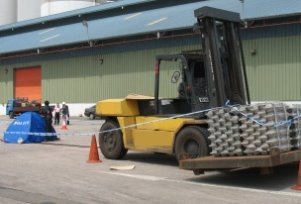
    Another worker was killed by a forklift in a workplace accident last year.
    While attempting to apply the hand brake of his forklift, the operator stepped onto the forklift’s accelerator. The forklift surged forward, hit a worker who was near it and sandwiched his head against a pillar.
    MOM had stopped all works involving the use of forklifts in the premises. Investigation of the accident is ongoing.

    Tuesday, January 09, 2007

    & More Forklift Accidents

    From: Ministry of Manpower, Singapore - OSH Alert dated 8 Jan 2007

    Case 1: Toppled Forklift Takes a Life
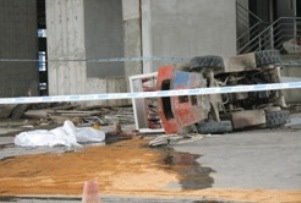
    A forklift that overturned took the life of the forklift operator in a recent construction site accident. The forklift was travelling down a circular vehicle ramp when it suddenly overturned causing the forklift operator to fall out of the driver compartment and his head to be pinned under the forklift.
    Ministry of Manpower (MOM) had stopped all works involving the use of forklifts in the premises. The accident investigation is still in progress.


    Case 2: Forklift runs over supervisor
    A walk outside a warehouse proved fatal for a delivery supervisor in another forklift-related accident recently. The victim was knocked down and run over by a forklift truck traveling perpendicular to him.
    MOM investigation into the accident is still in progress.

    Friday, December 29, 2006

    More Forklift Accidents


    Case 1: Toppled Forklift Takes a Life...
    While travelling along a temporary access way in a worksite, a forklift suddenly toppled into an embankment area undergoing some excavation works. The forklift operator, who had not attended any formal training, was pinned by the forklift and died in hospital on the same day. MOM issued a full stop work order on the premises. Investigation is on-going.


    Case 2: Side Loader Hits Depot Manager…
    A fatal accident occurred in a factory carrying out storage and service of containers. While driving a side loader with the intention to load a container onto a trailer, the driver hit and killed a depot manager. MOM had stopped all works involving the use of side loaders in the factory. Investigation of the accident is in progress.

    Fend off potential forklift accidents by picking up some priceless lessons from the past. The Japan International Center for Occupational Safety and Health (JICOSH) has developed an extensive archive of forklift case studies complete with clever illustrations and preventive tips. To lift up your knowledge on forklift accidents, click HERE.

    Advisory Note (Please note that the advisory note is provided for the benefits of enhancing workplace safety and health, in no way the information is to be misconstrued as implying any liability on any party)

    1. Prior to work commencement, a risk assessment shall be conducted in relation to the safety and health risks posed to any person carrying out the work.
    2. Safety measures should be implemented to control the human and vehicle traffic so as to prevent accidental collision and to ensure that the boundaries between access way and excavated area are well-demarcated. Develop a traffic management plan for pedestrians and forklifts.
    3. Safe work procedures must be instituted, communicated and implemented to ensure the safety and health of workers involved.
    4. All counterbalanced forklift drivers must undergo all mandatory trainings and be qualified to operate forklifts.
    5. Undertake all safety procedures, including pre-use checks, before starting to use the forklift. Never disable the safety features such as seat safety switches and reversing beepers.
    6. Implement a control system for access to the forklift. Ignition key of forklift trucks should not be allowed to be left on the truck to allow unauthorized operation.
    7. Forklifts should not be overloaded and driven with the fork raised.
    8. Keep to a safe speed and never allow any passengers on a forklift.
    9. Forklift operators must use seatbelts for their own safety. Hold on firmly and remain in the cabin in the event of an overturn.
    10. Do not lift people using a forklift as forklifts are designed to lift and move loads.
    11. Avoid turning when operating on ramps or inclines.
    12. Travel in reverse when vision is blocked. Always sound the horn and slow down when approaching corners and intersections.

    (This article was extracted from OSH ALert dated 26 Dec 2006 from the Ministry of Manpower, Singapore)

    Tuesday, December 19, 2006

    Falling from Height: Tilted Gondola Takes a Life

    A construction worker fell to his death from a tilted gondola at a
    construction worksite this year.

    The tragedy happened while two workers were attempting to reposition a gondola on the external cantilevered platform at the 9th storey of a building under construction. While one of the workers had repositioned the outriggers at the top of the building, the deceased who was inside the gondola attempted to tension the cables with the climbers. As a result, the gondola tilted and the deceased plunged to his death.

    Investigation by the Ministry of Manpower (MOM) is still in progress.

    Advisory Note
    (Please note that the advisory note is provided for the benefits of enhancing workplace safety and health, in no way the information is to be misconstrued as implying any liability on any party)
    1. All works involving the erection, installation, alteration and dismantling of suspended scaffold shall be undertaken by an Approved Suspended Scaffold Contractor.
    2. The suspended scaffold, including its suspension ropes and climbers must be in good condition and free from defects. A maintenance programme must be implemented to ensure proper working condition of the suspended scaffold.
    3. A competent person shall be appointed to carry out the necessary inspections on the
      suspended scaffold prior to use, and after any event that could affect the safe operation of the scaffold.
    4. All operators of the suspended scaffold must be adequately trained in the proper use of the scaffold. All persons riding on the suspended scaffold shall be equipped with a safety harness which shall be attached to an independent lifeline at all times.
    5. All handheld tools used in a suspended scaffold must be properly secured to prevent them from dropping out of the scaffold. The area below the scaffold must be cordoned off to prevent the risk of objects falling down on any persons.
    6. Adequate risk assessment shall be conducted for the use of suspended scaffolds. All erectors/operators/users of suspended scaffold shall be briefed on the safe work procedures that have been established.

    This article was extracted from OHS Alert dated 4 December 2006, issued by the Ministry of Manpower.

    Ladder Safety

    This article was adapted from the Electrical Safety - Safety and Health for Electrical Trades by Dept. of Health and Human Services, NIOSH

    To prevent injury when climbing, follow these procedures:
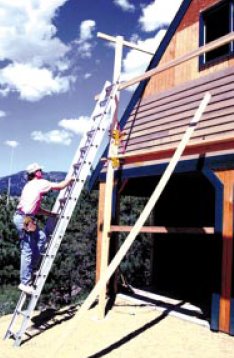
    1. Position the ladder at a safe angle to prevent slipping. The horizontal distance from the base of the ladder to the structure should be one-quarter the length of the ladder. If you don’t have a way to make this measurement, follow the steps below to determine if the ladder is positioned at a safe angle.

    • Put your feet at the base of the ladder and extend your arms straight out.
    • If you can touch the closest part of the ladder without bending your arms, the ladder is probably at the correct angle.
    • If you have to bend your arms to touch the closest part of the ladder or if you can’t reach the ladder at all, the ladder is not positioned at a safe angle.

    2. Make sure the base of the ladder has firm support and the ground or floor is level. Be very careful when placing a ladder on wet, icy, or otherwise slippery surfaces. Special blocking may be
    needed to prevent slipping in these cases.
    3. Follow the manufacturer’s recommendations for proper use.
    4. Check the condition of the ladder before using it. Joints must be tight to prevent wobbling or leaning.
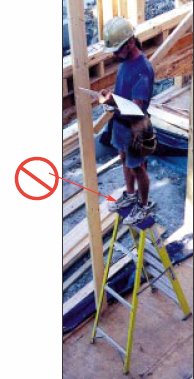
    5. When using a stepladder, make sure it is level and fully open. Always lock the hinges. Do not stand on or above the top step.
    6. When using scaffolding, use a ladder to access the tiers. Never climb the cross braces.
    7. Do not use metal ladders. Instead, use ladders made of fiberglass. (Although wooden ladders are permitted, wood can soak up water
    and become conductive.)
    8. Beware of overhead powerlines when you work with ladders and
    scaffolding.

    Monday, November 13, 2006

    Forklift Accidents


    Taking Stock Takes Tragic Turn
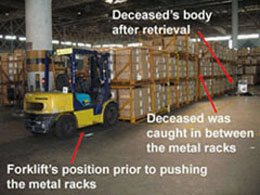
    Tasked to take stock, a worker had squeezed into a gap between racks of goods to take count. In a tragic turn of events, he was crushed to death when a forklift pushed the racks closer.
    The Ministry of Manpower (MOM) immediately instructed the occupier to stop all operations in the premises. Investigation has commenced and is still in progress. The occupier was also instructed to conduct risk assessment on all types of work and develop safe work procedures.

    Toppled Forklift Takes a Life
    The second day on the job sadly marked the end of a young forklift driver. The 25-year-old worker was killed instantly when the forklift he was operating toppled off a ramp.
    The Ministry of Manpower immediately instructed the occupier to stop all forklift operations in the premises. Investigation has commenced and is still on-going.


    Worker Ran Over by Forklift
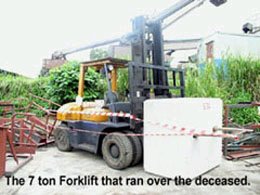
    A short nap near a vehicle access road (part of a T-junction) by a 30-year-old worker, turned fatal when he was run over by a forklift. The worker, a painter/grinder, who was lying next to a steel fabricated block died on the spot.
    The occupier was instructed to review all forklift operations and plant maintenance in the yard. Investigation is still on-going.

    Advisory Note - Eight Safety Tips for Forklifts
    (Please note that the advisory note is provided for the benefits of enhancing workplace safety and health, in no way the information is to be misconstrued as implying any liability on any party)

    Forklifts are powerful machines that if handled improperly can turn into deadly weapons. Here are eight tips to bear in mind for the safe handling of forklifts:
    1. Check to ensure that the forklift driver is properly qualified to operate a forklift and has undergone all mandatory training before employment.
    2. Undertake all safety procedures including pre-use checks before starting to use the forklift.
    3. Avoid shock-loading/over-loading forklifts.
    4. Do not use forklifts for the wrong purposes; as bulldozers, or elevators, for example.
    5. Never drive an unloaded forklift with the forks raised and drive at a safe speed.
    6. Never disable the safety features such as seat safety switches and reversing beepers to avoid annoyance. Regular forklift maintenance must be carried out.
    7. Access routes for workers and forklifts must be clearly marked and separated whenever practicable.
    8. There must be proper work coordination to ensure that materials or objects handled by the forklift do not pose hazard to other workers.

    To ensure that comprehensive risk assessment and proper safety measures are in place for forklift operations, the MOM's Occupational Safety and Health (OSH) inspectors will be intensifying their checks on forklift operations with effect from 10 July 2006.

    Click on the following to read the MOM press release on forklift operation:
    http://www.mom.gov.sg/PressRoom/PressReleases/20060703-MOMtargetsforkliftoperationstoimproveworkplacesafety.htm
    The Workplace Safety and Health Advisory Committee (WSHAC) has designed a checklist for efficient and safe forklift operation. Click the following to download the checklist:
    http://www.mom.gov.sg/NR/rdonlyres/76133C9E-00E6-4A32-94B7-232AEB9D3932/10600/Checklistonforkliftoperations_Jun2006.pdf

    From Ministry of Manpower, Singapore in the OSH Alert dated 6 July 2006

    Lorry Crane Topple

    Fatal Accident Involving A Lorry Crane
    A fatal accident took place at a construction site in early 2006 when a lorry crane was deployed to transfer reinforcement bars from a trailer into an excavation.
    During the lifting process, the lorry crane lost its stability and toppled onto the bank of the excavation. The lorry crane operator was pinned by the falling rebars that were loaded on the bed of the lorry crane. He was conveyed to hospital where he succumbed to his injuries.


    Advisory Note (Please note that the advisory note is provided for the benefits of enhancing workplace safety and health, in no way the information is to be misconstrued as implying any liability on any party)
    1. Under the WSH (Risk Management) Regulations, comprehensive risk assessment shall be conducted for all work processes to eliminate or control risks. For lifting operations, risk assessment shall be conducted to evaluate the types of equipment (such as cranes) appropriate for the intended lifting operations, afterwhich safe work procedures to be developed and implemented for use of that equipment.
    2. The primary function of a lorry crane is to facilitate the loading and unloading of materials/goods within close proximity to the lorry crane itself. Occupiers and employers should ensure that lorry cranes are used for this intended purpose.
    3. The operation of all cranes and lifting machines must adhere to the manufacturers’ safety guidelines. If the crane or lifting machine’s outriggers cannot be extended as per manufacturer’s specifications due to space constraints, alternative methods like re-positioning the crane to a more spacious locations or the use of other types of cranes (such as crawler crane) without the need for outriggers should be considered.

    Article from Ministry of Manpower, Singapore on OSH Alert, dated 30 Oct 2006

    Wednesday, September 20, 2006

    Unsafe Practices


    Some people don't value their lives... some snapshots from Singapore.

    Why bother with personal protective equipment (PPE) ... when we can do without it..


    Easily 8m drop. <--

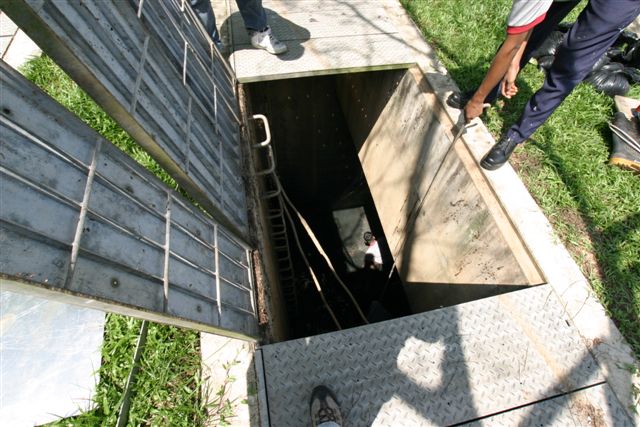
    Confined space entry without PPE

    Friday, September 01, 2006

    Worker killed in laundry fire caused by spontaneous ignition


    Reported on 7 August 2006

    A fire broke out at the ground floor of a laundry in the middle of the night. Four workers were sleeping at the second level of the factory at the time of the fire. Three of them managed to escape by jumping out of the window, but one of the workers failed to escape and was killed in the fire.
    Preliminary investigation revealed that the fire could have been probably caused by spontaneous ignition, a result of poor dissipation of heat generated from chemical reactions of chemical residues in the laundry.

    Advisory Note (Please note that the advisory note is provided for the benefits of enhancing workplace safety and health, in no way the information is to be misconstrued as implying any liability on any party)

    1. Spontaneous ignition may occur when heat, combustible material and reactive chemicals are present. Besides laundry factories, this dangerous combination can also be found in other workplace conditions such as stacks of oil-stained cloth left in an excavator cabin under the hot sun or a load of oil-stained fabrics stored in a boiler room of a chemical plant.
    2. A laundry fires study* highlighted that spontaneous ignition was the cause of the vast majority of these fires. The ignition can take place over a period of time, ranging from three to more than 57 hours. This implies that fires caused by spontaneous ignition can occur after working hours.
    3. Laundry factories need to take note of spontaneous ignition as they are always exposed to the dangerous combination of heat, combustible material and reactive chemicals. In addition, soiled linens can contain all sorts of potentially reactive materials. Here are some measures that laundry factories should implement:
      a. Inform all workers of the hazard of spontaneous ignition.
      b. Make sure that all the dryers have a cool down cycle long enough to properly lower the temperature of the dryer load. Check the temperature settings of each dryer on a regular basis.
      c. Maintain dryers regularly to ensure that laundry will not be heated to excessively high temperatures.
      d. Wash items with oily stains thoroughly and use a proper heavy-duty liquid laundry detergent.
      e. Allow enough time for all heat to dissipate before folding or bundling.
      f. Never store bundled or folded laundry in boiler rooms, next to hot water heaters, behind dryers, or any areas where the temperature is higher than normal room temperature.
      g. Install smoke detectors and sprinklers in areas where bundled or stacked laundry are stored. Ensure effective implementation of other emergency measures like fire extinguishers, evacuation route and fire drills.
      h. Never allow large loads to remain in dryers after the drying cycle has ended.
      i. When a laundry catches fire, normal plastic laundry carts will melt and the flaming liquid plastic can spread the fire. Check with your cart supplier or manufacturer to ensure that the laundry carts are made of noncombustible or highly fire-retardant materials.
    4. MOM is in the midst of developing a Technical Advisory on spontaneous ignition. The Technical Advisory will be made available to all laundry factories in due course.


    * Robison, Don. “Laundry Fire, Probable Cause: Spontaneous Ignition” in Industrial Fire World Magazine.

    Noise-Induced Hearing Loss

    On this page:

    How do we hear?
    What sounds cause NIHL?
    What are the effects of NIHL?
    What are the symptoms of NIHL?
    Who is affected by NIHL?
    Can NIHL be prevented?
    What research is being done for NIHL?
    Where can I get additional information?


    Every day we experience sound in our environment such as the television, radio, washing machine, automobiles, buses, and trucks. But when an individual is exposed to harmful sounds--sounds that are too loud or loud sounds over a long time--sensitive structures of the inner ear can be damaged, causing noise-induced hearing loss (NIHL).


    How do we hear?
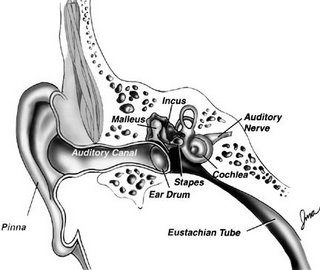
    Hearing is a series of events in which the ear converts sound waves into electrical signals that are sent to the brain and interpreted as sound. The ear has three main parts: the outer, middle, and inner ear. Sound waves enter through the outer ear and reach the middle ear where they cause the eardrum to vibrate.


    The vibrations are transmitted through three tiny bones in the middle ear, called the ossicles. These three bones are named the malleus, incus, and stapes (and are also known as the hammer, anvil, and stirrup). The eardrum and ossicles amplify the vibrations and carry them to the inner ear. The stirrup transmits the amplified vibrations through the oval window and into the fluid that fills the inner ear. The vibrations move through fluid in the snail-shaped hearing part of the inner ear (cochlea) that contains the hair cells. The fluid in the cochlea moves the top portion of the hair cells, called the hair bundle, which initiates the changes that lead to the production of nerve impulses. These nerve impulses are carried to the brain, where they are interpreted as sound. Different sounds move the hair bundles in different ways, thus allowing the brain to distinguish one sound from another, such as vowels from consonants.

    What sounds cause NIHL?
    NIHL can be caused by a one-time exposure to loud sound as well as by repeated exposure to sounds at various loudness levels over an extended period of time. The loudness of sound is measured in units called decibels. For example, normal conversation is approximately 60 decibels, the humming of a refrigerator is 40 decibels, and heavy city traffic noise can be 85 decibels. Examples of sources of loud noises that cause NIHL are motorcycles, firecrackers, and firearms, all emitting sounds from 120 to 150 decibels. Sounds of less than 80 decibels, even after long exposure, are unlikely to cause hearing loss.

    Exposure to harmful sounds causes damage to the sensitive hair cells of the inner ear as well as the hearing nerve. These structures can be injured by two kinds of noise: loud impulse noise, such as an explosion, or loud continuous noise, such as that generated in a woodworking shop.


    What are the effects of NIHL?
    Impulse sound can result in immediate hearing loss that may be permanent. The structures of the inner ear may be severely damaged. This kind of hearing loss may be accompanied by tinnitus, a ringing, buzzing, or roaring in the ears or head, which may subside over time. Hearing loss and tinnitus may be experienced in one or both ears, and tinnitus may continue constantly or occasionally throughout a lifetime.

    Continuous exposure to loud noise also can damage the structure of the hair cells, resulting in hearing loss and tinnitus. Exposure to impulse and continuous noise may cause only a temporary hearing loss. If the hearing recovers, the temporary hearing loss is called a temporary threshold shift. The temporary threshold shift largely disappears 16 to 48 hours after exposure to loud noise.

    Both forms of NIHL can be prevented by the regular use of hearing protectors such as earplugs or earmuffs.


    What are the symptoms of NIHL?
    The symptoms of NIHL increase gradually over a period of continuous exposure. Sounds may become distorted or muffled, and it may be difficult for the person to understand speech. The individual may not be aware of the loss, but it can be detected with a hearing test.

    Who is affected by NIHL?
    More than 30 million Americans are exposed to hazardous sound levels on a regular basis. Individuals of all ages, including children, adolescents, young adults, and older people, can develop NIHL. Exposure occurs in the workplace, in recreational settings, and at home. Noisy recreational activities include target shooting and hunting, snowmobiling, riding go-carts, woodworking and other noisy hobbies, and playing with power horns, cap guns, and model airplanes. Harmful noises at home include vacuum cleaners, garbage disposals, gas-powered lawn mowers, leaf blowers, and shop tools. And it makes no difference where a person lives--both urban and rural settings offer their own brands of noisy devices on a daily basis. Of the 28 million Americans who have some degree of hearing loss, about one-third can attribute their hearing loss, at least in part, to noise.

    Can NIHL be prevented?
    NIHL is preventable. All individuals should understand the hazards of noise and how to practice good health in everyday life.

    • Know which noises can cause damage (those above 85 decibels).
    • Wear earplugs or other hearing protective devices when involved in a loud activity (special earplugs and earmuffs are available at hardware stores and sporting good stores).
    • Be alert to hazardous noise in the environment.
    • Protect children who are too young to protect themselves.
    • Make family, friends, and colleagues aware of the hazards of noise.
    • Have a medical examination by an otolaryngologist, a physician who specializes in diseases of the ears, nose, throat, head, and neck, and a hearing test by an audiologist, a health professional trained to identify and measure hearing loss and to rehabilitate persons with hearing impairments.

    What research is being done for NIHL?
    Scientists are studying the internal workings of the ear and the mechanisms that cause NIHL so that better prevention and treatment strategies can be developed. For example, scientists have discovered that damage to the structure of the hair bundle is related to temporary and permanent loss of hearing. When the hair bundle is exposed to prolonged periods of damaging sound, the basic structure of the hair bundle is destroyed and the important connections among hair cells are disrupted. These structural changes lead directly to hearing loss.

    Recent NIDCD research
    Recent findings by NIDCD researchers show that hair bundles are capable of rebuilding their structure from top to bottom over a 48-hour period (the common duration of temporary hearing loss). Researchers suggest that permanent hearing loss may occur when damage is so severe that it overwhelms the self-repair mechanism. 1
    1 Schneider M.E., Belyantseva I.A., Azevedo R.B., Kachar B. Rapid renewal of auditory hair bundles. Nature. 22 Aug 2002. 418(6900): 837-838.

    Drug therapies
    Other studies involve potential drug therapies for NIHL. For example, scientists are studying how changes in blood flow in the cochlea affect hair cells. When a person is exposed to loud noise, blood flow in the cochlea drops. However, a drug that is used to treat peripheral vascular disease (any abnormal condition in blood vessels outside the heart) maintains circulation in the cochlea during exposure to noise. These findings may lead to the development of treatment strategies to reduce NIHL.
    Continuing efforts will provide opportunities that can aid research on NIHL as well as other diseases and disorders that cause hearing loss.

    http://www.nidcd.nih.gov/health/hearing/noise.asp